


.png?width=50&height=50&name=feedbackfive-menu-icon(orange).png "feedbackfive-menu-icon(orange)")
Originally published on April 27, 2026, updated April 27, 2026
Menu
Join Our Email List
- Receive our monthly newsletter.
- Stay up to date on Amazon policies.
- Get tips to grow your business.
/%5BeComEngine%5DLogo-2019-linear.svg "eComEngine Logo")
 |
Review Monitoring Quickly identify review trends |
|
Review Monitoring Quickly identify review trends |

Running an Amazon business without a monthly operating rhythm is a little like driving cross-country with no dashboard, no GPS, and one teammate shouting, “I think we’re doing great?” from the back seat.
Sometimes you still get there.
Sometimes you end up in a ditch made entirely of stockouts, fee surprises, sluggish review growth, and “Wait... who was supposed to handle that?”
That’s why every serious store needs a monthly ops meeting for Amazon sellers. Not a bloated, soul-draining meeting that could’ve been an email. A sharp, focused, 60-minute operating check-in that helps your team spot problems faster, make smarter decisions, and keep the business moving in the right direction.
And yes, reviews belong in that meeting. Big time. PowerReviews reports that 98% of shoppers say reviews are an essential resource when making purchase decisions, and 93% say ratings and reviews impact whether they buy. So if your store is not reviewing review performance regularly, that’s not a minor oversight. That’s like ignoring the check engine light and hoping the car respects your optimism.
A lot of Amazon sellers operate in reaction mode.
Sales dip? Panic.
Inventory gets tight? Panic.
A listing changes, margin shrinks, reviews slow down, or a best seller quietly loses momentum? Bigger panic. Possibly with coffee.
A good monthly operating meeting fixes that.
It gives you one protected hour each month to step back, look at what actually happened, decide what matters most, and assign action items before small problems graduate into expensive ones. It creates consistency. It creates accountability. And perhaps most importantly, it creates adult supervision.
Your monthly ops meeting for Amazon sellers should do four things:
That’s it.
This is not the meeting for deep-diving every ad, every SKU, every customer comment, and every emotional response to one weird Tuesday. This is a decision meeting. The goal is clarity, not chaos.
Keep the guest list tight. The right people usually include:
If someone can’t help interpret the numbers or own an action item, they probably do not need to be in the meeting. No offense to Chad. He seems nice.
Here’s a practical agenda you can use every month.
Kick off with three simple questions:
This gets everyone aligned fast. It also surfaces early warning signs that might not show up neatly in one dashboard tile.
This is your monthly scorecard review. Do not drown in metrics. Focus on the handful that actually tell you whether the store is healthier, shakier, or quietly leaking money.
At a minimum, review:
This is where your monthly ops meeting for Amazon sellers starts doing real work. It forces the team to move from “I think things are okay” to “Here’s what the numbers are saying.”
Because they do!
PowerReviews found that reviews are central to shopper decision-making, with 98% of shoppers calling reviews an essential resource and 45% saying they will not purchase a product if no reviews are available. That makes review performance a revenue conversation, not just a reputation conversation.
During this section, review:
Ask:
This is a great place to reinforce a simple truth: if shoppers lean on reviews to decide, your team should be looking at review trends every single month. Not once a quarter. Not when someone remembers. Monthly.
Inventory drama has a special talent for showing up late and billing you heavily.
Use this section to review:
Ask:
This is where a monthly rhythm becomes incredibly valuable. You do not want replenishment decisions being made only when someone says, “Uh... we’ve got four units left.”
Not every store needs the exact same scorecard, but most Amazon sellers should review some version of the following every month.
These tell you whether growth is healthy or just loud.
Review:
These help explain why a product converts or stalls.
Review:
Remember, PowerReviews found 93% of shoppers say ratings and reviews impact whether they purchase a product. So if review strength is changing, conversion pressure may not be far behind.
These help protect cash flow and sales continuity.
Review:
These help catch the weird stuff before it gets expensive.
Review:
A great meeting does not just review numbers. It creates decisions.
Use prompts like these:
Ask which issue, if ignored for 30 more days, would hurt the business most.
That forces prioritization fast.
If the same issue keeps showing up, it is not a one-time problem. It is a broken process wearing a fake mustache.
Ask:
Sometimes the biggest issue is not the problem itself. It is the fact that nobody saw it early enough.
Ask:
End each major section with:
That last part matters more than people think. “We talked about it” is not the same as “It got handled.”
A few rules make this meeting dramatically more useful:
Time pressure is good. It forces better thinking and fewer side quests.
Consistency makes the meeting easier to run and easier to improve.
Discussion feels productive. Decisions are productive.
Every action item should have:
If it does not have all three, it has a decent chance of becoming a polite little ghost.
Here’s the real win: this meeting is not valuable because it is complicated. It is valuable because it is repeatable.
You do not need a giant operating playbook, a six-hour retreat, or a spreadsheet that looks like it was designed by a stressed-out NASA intern.
You need one hour.
One agenda.
One scorecard.
A few good questions.
And the discipline to actually do it every month.
That’s how stores get sharper. That’s how teams get aligned. That’s how fewer problems sneak through the floorboards.
If your team is going to spend 60 minutes making decisions, the data going into that meeting should be doing some heavy lifting.
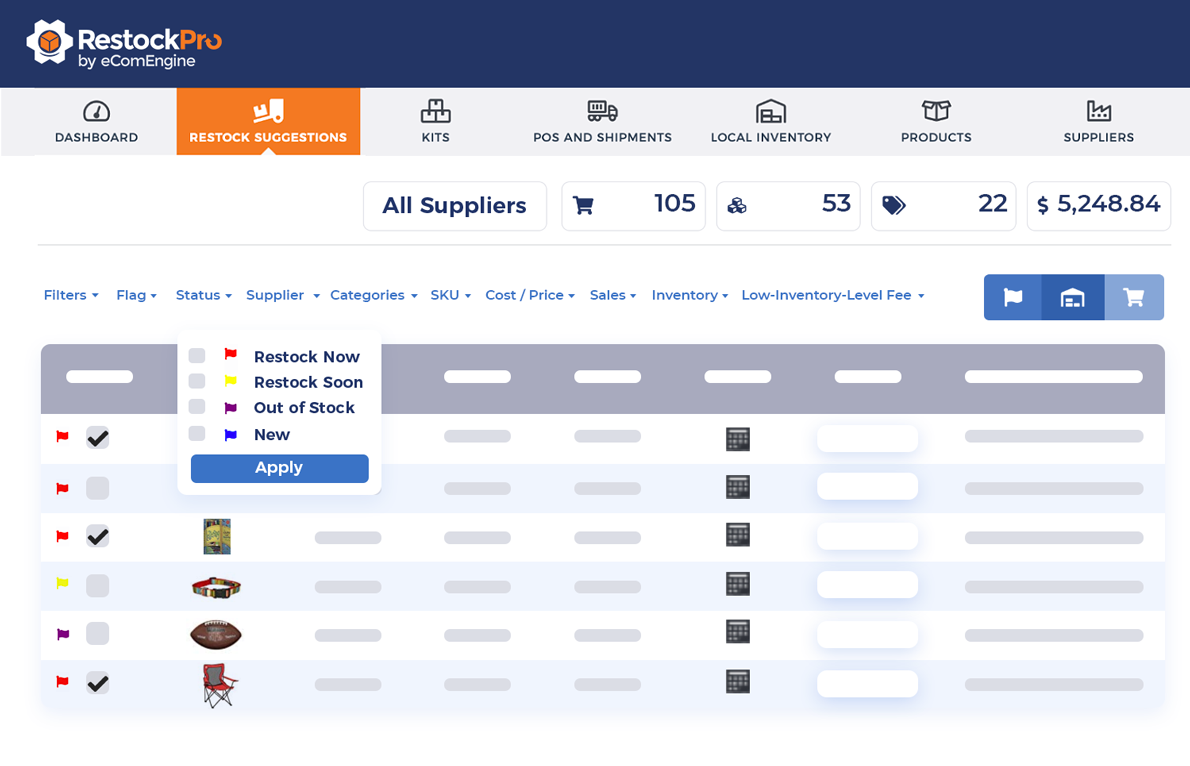
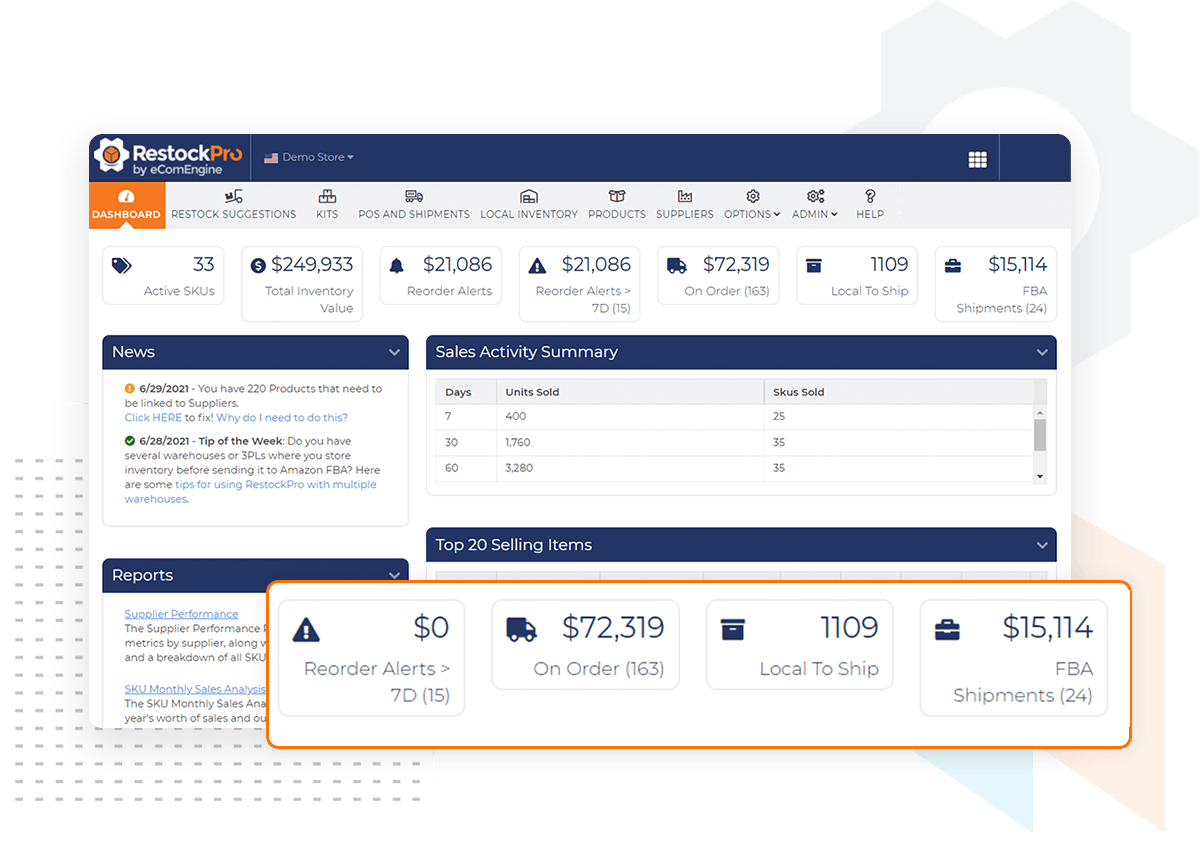
Use SellerPulse to surface the performance shifts, anomalies, and key store insights that deserve attention. Use RestockPro to bring inventory clarity into the room before stockouts or overstock make the decisions for you.
Q: 1: What is a monthly ops meeting for Amazon sellers?
A monthly ops meeting for Amazon sellers is a 60-minute check-in focused on store performance, inventory health, review trends, profitability, and next-step decisions. It helps sellers step back from day-to-day chaos, look at the numbers that matter, and assign clear action items before small issues turn into expensive problems.
Q: 2: How long should a monthly ops meeting for Amazon sellers take?
A monthly ops meeting should take about 60 minutes. That is usually enough time to review key metrics, identify problems, discuss priorities, and assign ownership without turning the meeting into a marathon of opinions, side quests, and spreadsheet-induced emotional damage.
Q: 3: What should be included in a monthly Amazon seller ops meeting?
A good monthly Amazon seller ops meeting should include revenue trends, profitability changes, inventory risks, review performance, top and bottom ASINs, listing or Buy Box issues, and key action items for the next 30 days. The goal is not to review everything. The goal is to review the right things and make smarter decisions faster.
Q: 4: Which metrics should Amazon sellers review every month?
Amazon sellers should review monthly revenue, profit trends, margin changes, review volume, average star rating, inventory coverage, stockout risk, overstock risk, and performance changes by SKU or ASIN. These metrics help sellers understand what is improving, what is slipping, and where attention is needed before the next month gets away from them.
Q: 5: Why should reviews be part of a monthly ops meeting?
Reviews should be part of a monthly ops meeting because they directly influence shopper trust and buying decisions. A drop in review velocity, a weak star rating, or repeated negative feedback can hurt conversion even when traffic stays steady. Reviewing feedback trends monthly helps sellers spot product, packaging, or listing issues before they drag down performance.
Q: 6: How often should Amazon sellers review inventory and restocking decisions?
Amazon sellers should review inventory and restocking decisions at least monthly, with more frequent checks for top-selling or seasonal SKUs. A monthly review helps teams catch stockout risks, identify slow-moving inventory, and make smarter replenishment decisions before cash gets tied up in the wrong products or sales disappear because the right products were not available.
Q: 7: Who should attend a monthly ops meeting for an Amazon store?
The monthly ops meeting should include the people responsible for store performance, inventory, reviews, profitability, and follow-through. For many sellers, that means the owner, operator, inventory lead, and anyone responsible for execution. If someone can help interpret the data or own an action item, they should be in the room. If not, they can be lovingly excused.
Q: 8: What tools can help run a better monthly ops meeting for Amazon sellers?
Tools like SellerPulse and RestockPro can help Amazon sellers run a better monthly ops meeting by giving teams clearer visibility into store performance, inventory risk, and issues that need attention. Instead of guessing what deserves discussion, sellers can walk into the meeting with better insights and leave with more confident decisions.
A strong monthly ops meeting is not about having more meetings. It is about making better decisions with better visibility. Use SellerPulse and RestockPro to bring the right insights into the room, spot problems earlier, and keep your Amazon business moving in the right direction.
Run Your Monthly Ops Meeting With Better Insights







No Comments Yet
Let us know what you think