


.png?width=50&height=50&name=feedbackfive-menu-icon(orange).png "feedbackfive-menu-icon(orange)")
Originally published on April 21, 2026, updated April 21, 2026
Menu
Join Our Email List
- Receive our monthly newsletter.
- Stay up to date on Amazon policies.
- Get tips to grow your business.
/%5BeComEngine%5DLogo-2019-linear.svg "eComEngine Logo")
 |
Review Monitoring Quickly identify review trends |
|
Review Monitoring Quickly identify review trends |

If you’re only glancing at your star rating and giving yourself a polite little nod, you’re leaving money on the table.
Reviews are not just public applause. They’re not just complaints with punctuation. They’re one of the clearest sources of product intelligence you already have. A smart Amazon review audit can show you exactly what shoppers love, what makes them hesitate, and what’s quietly tanking conversion before your PPC budget gets blamed for crimes it did not commit.
And yes, this stuff matters. Spiegel Research Center found that reviews have a measurable impact on purchase behavior, including the influence of both star ratings and review content. Their research also found that products with five reviews had purchase likelihood 270% higher than products with none, and that purchase likelihood often peaks before a perfect 5.0 rating, typically in the 4.0–4.7 range.
That means your reviews are doing more than sitting there looking decorative. They’re shaping trust, setting expectations, and helping shoppers decide whether to click “Buy Now” or wander off to a competitor with a less suspiciously perfect 4.9.
A strong Amazon review audit helps you answer questions like:
This is where reviews stop being “feedback” and start becoming one of the most useful conversion tools in your business.
Because when shoppers read reviews, they are looking for reassurance. They want proof. They want honesty. They want to know whether your product actually solves the problem it claims to solve, or if it’s all just polished bullets and emotional support lifestyle photos.
A 4.3-star product and a 4.3-star product can be living very different lives.
One might have consistent praise for durability, ease of use, and quality. The other might have a review section full of “looks nice, but broke after a week” and “not what I expected.” Same average. Very different conversion reality.
That’s because shoppers don’t just scan the number. They read the language around it.
Spiegel’s research specifically points to both review content and star ratings as meaningful drivers of purchase likelihood. In other words, the stars matter, but the story behind the stars matters too.
So if your current review strategy is “we seem fine,” that’s not a strategy. That’s wishful thinking dressed as optimism.
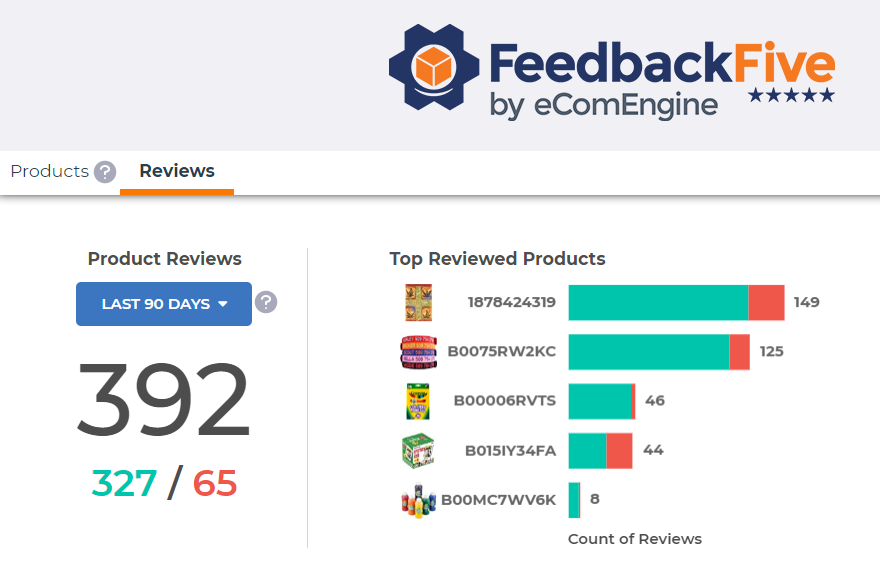
A proper Amazon review audit is not complicated, but it does need structure. Here’s the process.
Before you dive into individual comments, look at the review landscape as a whole.
Review the following:
This gives you baseline context. Are reviews steady? Improving? Sliding in a way that suggests a quality issue, fulfillment issue, or growing expectation gap?
Also remember this: a perfect score is not always the flex people think it is. Spiegel found purchase likelihood tends to peak before five stars, because shoppers can become skeptical when ratings look too polished. A little imperfection often feels more believable.
Now it’s time to stop reading reviews like a human and start reading them like a pattern-hunting goblin with a spreadsheet.
Create buckets for recurring themes such as:
Do this for both positive and negative reviews.
Why both? Because negative reviews show friction, but positive reviews reveal what actually drives confidence and satisfaction. Those positive insights can become bullets, A+ content language, image captions, and ad angles.
This is where the real money lives.
Not every bad review means your product is bad. Sometimes the issue is the listing. Shoppers thought it was larger, stronger, softer, easier, faster, thicker, lighter, or more magical than it actually is.
That means your Amazon review audit should classify complaints into two categories:
Product Issues
These are real problems with the item itself.
Examples:
Listing Issues
These are expectation failures created by weak content.
Examples:
This distinction matters because the fix is completely different.
Product issue? You may need sourcing, packaging, QA, or operations changes.
Listing issue? You need better copy, clearer images, stronger comparison charts, or more transparent product education.
That’s a much cheaper fix than panicking and assuming the whole product line is doomed.
If you want to identify what’s hurting conversions, look for reviews that mention hesitation language.
These often sound like:
These reviews are gold.
They often come from shoppers who were close to being delighted but got tripped up by one friction point. That friction point is your conversion blocker.
Maybe your main image doesn’t show scale well enough.
Maybe your bullet points are too generic.
Maybe the product solves the problem, but your listing isn’t explaining the setup clearly.
Maybe the reviews mention one amazing use case that your content barely touches.
That’s the kind of stuff an Amazon review audit uncovers before another month of traffic bounces away.
Once you’ve identified patterns, it’s time to actually use them.
If customers consistently use the same words to describe benefits, pay attention. Their phrasing is often more persuasive than whatever overly caffeinated copywriter came up with in a Google Doc six months ago.
Look for phrases tied to:
If shoppers say “easy to set up in under five minutes,” and your listing says “simple installation,” one of those is doing more work. And it’s not yours.
If reviews repeatedly mention size confusion, packaging, texture, or how the product is used, your images should help solve that.
Use review insights to guide:
A lot of negative reviews are just failed communication wearing a one-star trench coat.
Your A+ content is a perfect place to answer the questions shoppers ask without ever contacting you directly.
Use insights from your Amazon review audit to address:
This builds trust because it shows clarity, not desperation.
A lot of sellers focus so hard on negative reviews that they miss the most useful part of the audit: what happy customers consistently praise.
Positive reviews help you identify:
That can directly influence:
If your best reviews consistently mention that your product feels sturdier, lasts longer, or solves a problem faster than expected, that language belongs in your listing.
Because if customers are already saying it, you’re not inventing a claim. You’re amplifying proof.
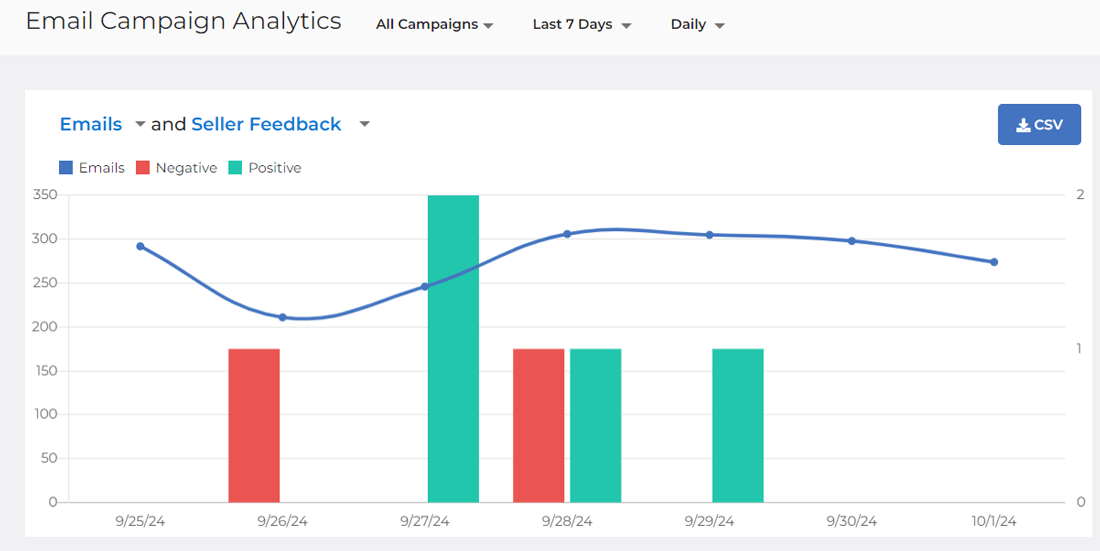
Here’s a practical process you can repeat every month without needing a giant analytics team or a ceremonial dashboard meeting.
Review the last 30 to 90 days of product reviews for your top ASINs.
Create simple buckets for praise, complaints, confusion, and feature requests.
Identify which themes show up most often and whether they influence trust, usability, quality, or perceived value.
Tag each issue as:
Focus first on themes most likely to influence purchase decisions:
Update bullets, images, A+ content, and brand messaging using the clearest review-backed insights.
Continue collecting a steady stream of fresh reviews so your audit reflects current buyer reality, not ancient history from when your listing still looked like it was assembled during a power outage.
When shoppers scan your review section, they’re usually trying to answer a few simple questions:
They look at star rating, review count, and tone.
They look for use cases, context, and reviewer similarity.
They read negative reviews to understand the risk.
They compare your product page claims with what actual buyers experienced.
That’s why a review audit matters so much. It helps you understand the conversation happening after your listing stops talking.
And if you’re smart, you use that conversation to make the listing better.
The point is not to obsess over every complaint like it’s a hostage situation.
The point is to find patterns.
A single weird review might just be someone having a dramatic day. But repeated themes? That’s signal. That’s insight. That’s your product page quietly telling you where it needs help.
An effective Amazon review audit helps you:
That’s not just good brand hygiene. That’s better selling.
Reviews are only useful if you keep collecting them.
A review section that hasn’t grown in months starts to feel stale. A product with very old feedback can make shoppers wonder whether the item, the seller, or the quality has changed since those glowing comments rolled in.
And since Spiegel’s research found that reviews materially affect purchase likelihood, maintaining steady review visibility is not something to leave on autopilot and hope for the best.
Your reviews are not just there to make the stars look pretty. They’re one of the clearest windows into shopper trust, hesitation, disappointment, and delight.
Run an Amazon review audit regularly, and you’ll stop guessing what’s hurting conversions. You’ll know what shoppers are reacting to, what your listing needs to fix, and what strengths deserve a brighter spotlight.
That’s how reviews go from passive social proof to active conversion strategy.
And that’s a whole lot more useful than checking your average star rating once a week and whispering, “seems fine.”
If reviews are this valuable, you do not want collection to be inconsistent, manual, or dependent on someone remembering to deal with it after lunch.
Q: 1: What is an Amazon review audit?
An Amazon review audit is the process of analyzing your product reviews to identify repeated themes, customer frustrations, buying objections, and strengths shoppers consistently mention. It helps sellers understand what their star rating, written feedback, and review patterns are actually communicating to future buyers. A strong Amazon review audit can reveal both product issues and listing issues that may be affecting conversions.
Q: 2: Why does an Amazon review audit matter for conversions?
An Amazon review audit matters because shoppers do not only look at your average star rating. They also read review content to decide whether your product feels trustworthy, useful, and worth the price. When you audit reviews regularly, you can uncover conversion blockers, improve your listing content, and better align your product page with what customers actually care about.
Q: 3: What should sellers look for during an Amazon review audit?
During an Amazon review audit, sellers should look for repeated complaints, repeated praise, expectation gaps, quality concerns, shipping or packaging issues, and confusion around product use or sizing. It is especially important to identify patterns that show up across multiple reviews rather than reacting to one isolated comment. The goal is to separate noise from signal and use that insight to improve the customer experience and the listing itself.
Q: 4: Can reviews help improve an Amazon listing?
Yes, reviews can absolutely help improve an Amazon listing. Positive and negative reviews often reveal exactly what shoppers love, what confuses them, and what nearly stopped them from buying. Sellers can use those insights to strengthen titles, bullets, images, A+ Content, and product descriptions so the listing addresses real buyer questions and concerns more clearly.
Q: 5: What is the difference between a product problem and a listing problem in reviews?
A product problem usually means the item itself is falling short, such as poor durability, missing parts, or inconsistent quality. A listing problem usually means the product page created the wrong expectation, such as confusion about size, materials, setup, or intended use. An Amazon review audit helps sellers tell the difference so they can make the right fix instead of guessing.
Q: 6: How often should you perform an Amazon review audit?
Most sellers should perform an Amazon review audit at least once a month for key ASINs, and more frequently for high-volume products or listings with recent performance changes. Regular audits help you catch shifts in customer sentiment early and keep your listing aligned with what shoppers are saying right now. Waiting too long can allow small issues to quietly chip away at conversions.
Q: 7: How can sellers keep review insights fresh over time?
The best way to keep review insights fresh is to maintain a steady flow of new, authentic reviews. A review section that stays active gives sellers a more current view of shopper sentiment and gives future buyers more confidence in the product. Consistent review generation also makes every Amazon review audit more useful because the data reflects today’s buyer experience, not last year’s.
Keep review acquisition steady with FeedbackFive and turn fresh reviews into smarter listing improvements.
Start Your FREE FeedbackFive Trial







No Comments Yet
Let us know what you think