


.png?width=50&height=50&name=feedbackfive-menu-icon(orange).png "feedbackfive-menu-icon(orange)")
Originally published on April 14, 2026, updated June 24, 2026
Menu
Join Our Email List
- Receive our monthly newsletter.
- Stay up to date on Amazon policies.
- Get tips to grow your business.
/%5BeComEngine%5DLogo-2019-linear.svg "eComEngine Logo")
 |
Review Monitoring Quickly identify review trends |
|
Review Monitoring Quickly identify review trends |

Dead inventory has a funny way of pretending it’s “still got potential” while quietly charging rent in your Amazon account.
One slow-moving SKU becomes three. Three become fifteen. Before long, you’ve got cash tied up in products that aren’t helping rankings, aren’t helping profit, and definitely aren’t helping your blood pressure. That’s the part nobody enjoys talking about. The good news is this: inventory decisions get a whole lot easier when you stop making them emotionally.
This is your tactical guide to doing exactly that.
IHL says global inventory distortion reached $1.7 trillion in 2024, including $1.2 trillion from out-of-stocks and $554 billion from overstocks. In other words, “too much” inventory is not a cute little side issue. It is a global profit leak with a very expensive personality.
And on Amazon, the squeeze comes from both directions. Low-inventory-level fees can apply when stock falls below Amazon’s threshold relative to demand, while aged inventory surcharges and 2026 removal, disposal, and liquidation fee changes make it even more important to decide quickly whether a SKU deserves shelf space, a rescue plan, or a graceful exit.
Dead inventory is not just “inventory that hasn’t sold lately.”
For Amazon sellers, dead inventory is inventory that is no longer earning its spot. It moves too slowly, drains storage space, ties up working capital, and has little evidence that demand will rebound fast enough to justify holding it. That means the question is not, “Can this still sell someday?” The real question is, “Should I keep paying to wait?”
That’s a much less romantic question. Also a much more profitable one.
Here’s the trap: sellers often keep holding stale inventory because of one of these greatest hits:
True. And that money is not coming back because you stared at the SKU harder.
It might. It might also continue sitting there like a decorative paperweight with a UPC.
Also true. Your high school knees probably worked better too. We adapt.
The goal is not to defend past decisions. The goal is to make the best next decision.
When a SKU starts looking suspiciously sleepy, it usually belongs in one of three buckets.
Liquidation is the right move when the SKU has lost momentum and there is no strong evidence that demand is coming back soon enough to offset the cost of waiting.
This is especially important because Amazon’s current fee structure can penalize both stale inventory and poor inventory positioning. Aged inventory surcharges changed effective January 16, 2026 for items aged 366 days or more, and removal/disposal/liquidation order fees also changed in 2026. Waiting is not free. It is very much the opposite of free.
If the SKU is unlikely to recover margin, rank, or velocity in a reasonable timeframe, stop treating it like a turnaround story. Exit the position.
That may mean Amazon liquidation, removal, external clearance, or simply deciding not to replenish once current stock is gone. The exact tactic matters less than the discipline behind it.
Bundling is the move for inventory that is not dead-dead, but definitely not living its best life solo.
Sometimes a weak standalone SKU becomes useful when paired with a stronger one. That can help increase perceived value, move aging units faster, and improve contribution margin without slashing the product into oblivion.
This is where sellers can save inventory that still has utility but no longer has enough momentum to justify its own spotlight.
Bundle when the product still adds customer value and can ride shotgun with a healthier SKU profitably.
Do not bundle just because it sounds less painful than admitting a miss. Bundle because the new offer is genuinely better and more likely to convert.
Holding can be the right call. It just needs to be a strategic hold, not an emotional hostage situation.
Some inventory slows down for perfectly rational reasons:
Amazon’s low-inventory-level fee framework is another reason to stay rational here. Amazon says the fee can apply when FBA inventory falls below 28 days of supply relative to demand, so sellers need enough stock to avoid fee exposure without overcommitting to inventory that no longer deserves it. That balancing act is the whole game.
Hold only when you can clearly explain what will cause the SKU to recover, and when you will reevaluate if it does not.
No explanation? No hold.
Here’s the simple framework.
1) Is demand actually down, or did something break?
Look at traffic, conversion, pricing, ad support, seasonality, and competitive changes.
2) Is the product still profitable enough to save?
If margin is already wheezing, extra time won’t usually perform CPR.
3) Is there a believable recovery event ahead?
Seasonal peak, promo window, listing refresh, price reset, bundle launch, variation cleanup — something concrete, not vibes.
4) What does holding this SKU cost me?
Think storage fees, aged inventory risk, tied-up cash, warehouse space, and the opportunity cost of not deploying that capital elsewhere.
5) If I had zero units of this today, would I buy it again?
That question cuts through a shocking amount of nonsense.
If the answer is no, your inventory may be trying to tell you something.
Bad inventory decisions get expensive when sellers start protecting their ego instead of their margin.
Not every SKU deserves a comeback tour. Some deserve a bundle test. Some deserve a timed hold. Some deserve a respectful trip to liquidation with a tiny violin playing in the background.
The point is to use rules.
When you make inventory calls with consistent decision criteria, you stop bouncing between panic and denial. You start acting like an operator.
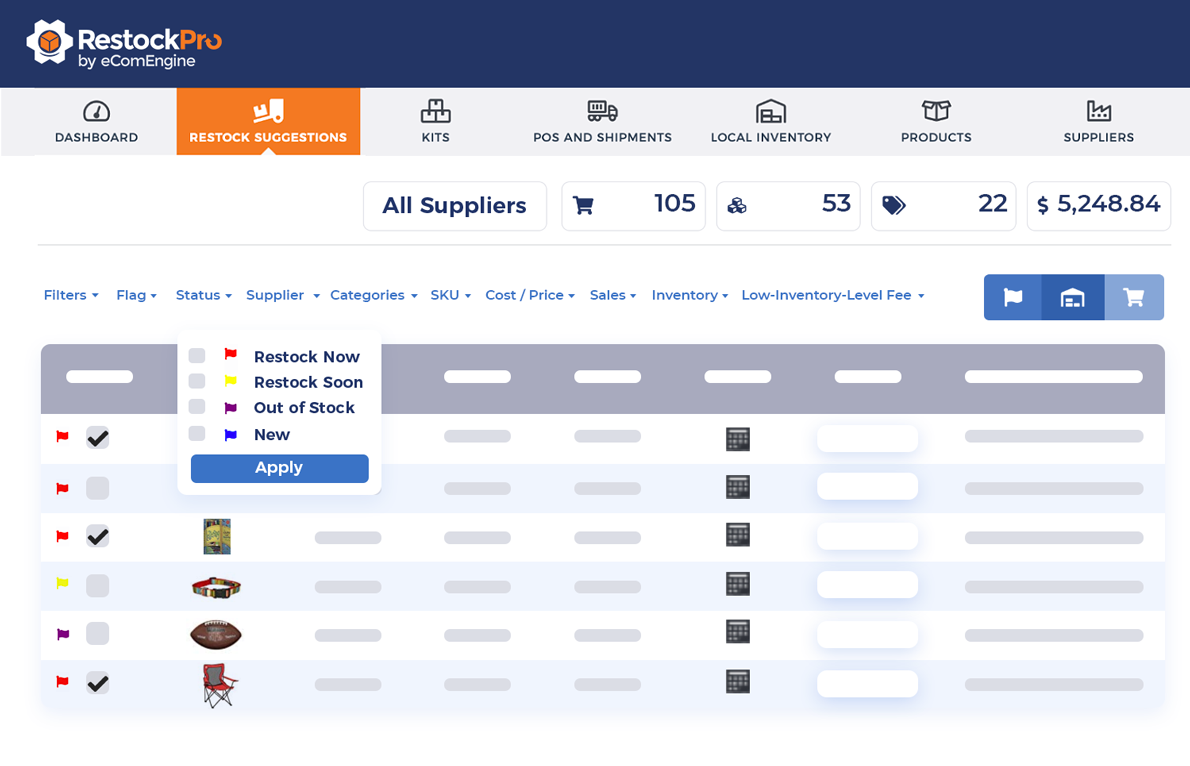
This is exactly where better inventory visibility earns its keep.
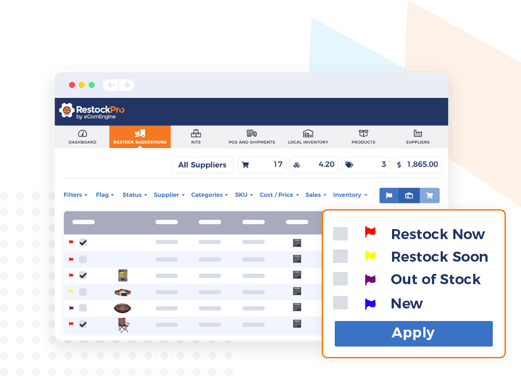
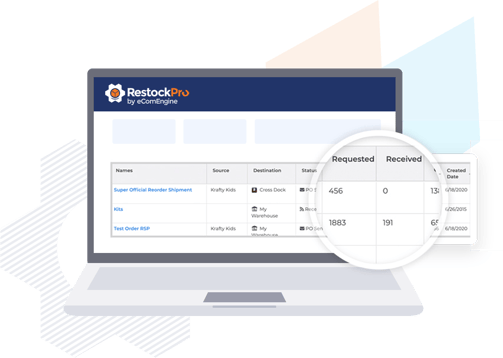
RestockPro helps Amazon sellers make replenishment decisions using configurable restocking rules based on sales velocity, target quantity on hand, coverage available, and cost assumptions. It also includes historical days of supply, Amazon’s minimum inventory level metrics, and SKU-level profitability data so sellers can spot which products are worth reordering, watching, bundling, or leaving in the rearview mirror.
That matters because dead inventory decisions are rarely about one metric. They are about context:
RestockPro gives you a cleaner way to evaluate those calls without running your business off a cocktail of memory, instinct, and spreadsheet archaeology.
That’s not a strategy. That’s a hostage negotiation with a SKU.
A discount can move inventory. It can also train the market to ignore you until you panic again.
Past performance deserves respect. It does not deserve blind loyalty.
Some need liquidation. Some need repackaging. Some just need timing. Use the right lever.
Every dollar stuck in weak inventory is a dollar not working in stronger products.
Dead inventory gets dangerous when sellers let time make the decision for them.
The better move is simple:
That is how you avoid death-by-storage-fees.
That is how you free up cash.
That is how you make cleaner Q2 inventory decisions without turning every stale SKU into a personal relationship.
And honestly, your margins deserve less drama.
It helps you make smarter replenishment calls based on demand, profitability, inventory coverage, and fee exposure, so your next inventory decision is based on data instead of denial.
Try RestockPro for FREE Today!
Q: 1: What is dead inventory on Amazon?
Dead inventory on Amazon is inventory that is no longer selling fast enough to justify the cost of keeping it in FBA. In plain English, it is stock that ties up cash, takes up space, and chips away at profit without doing much in return. A product does not have to be completely unsold to qualify as dead inventory. If it is moving too slowly, becoming expensive to hold, or showing little chance of rebounding, it deserves a closer look.
Q: 2: How do I know if I should liquidate Amazon inventory?
You should consider liquidating Amazon inventory when sales velocity has dropped, storage costs keep rising, and there is no clear reason to believe demand will recover soon. Liquidation usually makes sense when the SKU has weak margins, poor conversion, outdated seasonality, or no realistic path back to healthy performance. The goal is not to “save face.” The goal is to stop paying for inventory that has quietly stopped earning its keep.
Q: 3: When should I bundle slow-moving inventory instead of liquidating it?
You should bundle slow-moving inventory when the product still has value, but not enough to win on its own. Bundling works best when the item complements a stronger seller, improves the customer offer, or helps increase perceived value without relying on a deep discount. If the product is still useful and can make another SKU more appealing, bundling may be the smarter move than liquidating it too quickly.
Q: 4: When is it smart to hold dead inventory instead of getting rid of it?
It is smart to hold inventory when the slowdown appears temporary rather than permanent. That could include seasonal dips, temporary ranking loss, short-term ad issues, or a known demand spike ahead. Holding only makes sense when there is a specific, evidence-backed reason the SKU should recover. If the only reason you are holding it is “maybe it’ll come back,” that is not a strategy. That is wishful thinking wearing a warehouse badge.
Q: 5: What Amazon fees make dead inventory more expensive?
Dead inventory becomes more expensive because Amazon can charge fees that punish inefficient inventory positions over time. These may include monthly storage fees, aged inventory surcharges, and costs related to removal, disposal, or liquidation decisions. The longer weak inventory sits, the more likely it is to drain margin. That is why sellers need to make inventory decisions early, not after the SKU has already turned into a profit leak with packaging.
Q: 6: Should I ever reorder a slow-moving Amazon SKU?
Yes, but only if the numbers support it. A slow-moving SKU can still deserve a reorder if it remains profitable, has strong conversion fundamentals, and has a believable reason to rebound. What sellers should avoid is reordering out of habit, optimism, or nostalgia for how well the product used to perform. A better rule is this: if you would not choose to buy that SKU again today based on current data, you probably should not reorder it.
Q: 7: How can RestockPro help me avoid dead inventory on Amazon?
RestockPro helps sellers avoid dead inventory by making replenishment decisions more data-driven and less emotional. It gives sellers clearer visibility into inventory coverage, sales trends, profitability, and reorder timing so they can spot which SKUs deserve another purchase order and which ones should be watched, bundled, or retired. That means fewer expensive guesses, fewer stale units collecting dust, and a much better chance of putting cash into inventory that actually earns a return.
Use RestockPro to diagnose what to rebuy — and what not to — so you can protect cash flow, reduce costly overstock, and make smarter inventory calls with confidence.
Try RestockPro for FREE Today





No Comments Yet
Let us know what you think