


.png?width=50&height=50&name=feedbackfive-menu-icon(orange).png "feedbackfive-menu-icon(orange)")

Originally published on August 10, 2026, updated August 10, 2026
Menu
Join Our Email List
- Receive our monthly newsletter.
- Stay up to date on Amazon policies.
- Get tips to grow your business.
/%5BeComEngine%5DLogo-2019-linear.svg "eComEngine Logo")
 |
Review Monitoring Quickly identify review trends |
|
Review Monitoring Quickly identify review trends |

Every Q4, a smart seller stares at a healthy-looking balance, greenlights a monster purchase order, and feels like a genius. Then November hits. The inventory landed, the sales are rolling, the dashboard looks incredible, and somehow there’s no cash to reorder the one SKU that’s actually flying off the shelf.
Sound familiar? You didn’t have a demand problem. You had a timing problem. And timing problems are the quiet killer of Amazon Q4 inventory planning.
Let’s fix that before you sign anything.
Here’s the trap. Your Q4 sales forecast tells you how much inventory you should sell. It does not tell you how much inventory you can actually afford to buy right now. Those are two completely different numbers, and sellers blow up peak season by treating them as one.
Your supplier wants cash on the barrelhead, or close to it. Deposit up front, balance before it ships. That money leaves your account today. But the money coming back in from your sales? That shows up on Amazon’s schedule, not yours.
So the real question isn’t “how much will I sell in Q4.” It’s “how much cash do I have to put out the door before the money from those sales actually lands back in my account.” Answer that, and you’ve solved for the thing that quietly wrecks otherwise-profitable sellers.
Here’s the piece almost everyone forgets when they map out Amazon Q4 inventory planning: Amazon doesn’t hand you cash the moment a customer clicks buy.
Amazon settlement payouts typically land about 14 days after a sale, net of fees. Read that again. Two weeks. And net of fees means the referral fee, the FBA fulfillment fee, and every other deduction come out before a dollar hits your bank.
So the cash cycle actually looks like this. You pay your supplier today. Product ships and clears customs over several weeks. It sells across Q4. Then, roughly 14 days after each sale, the net payout arrives. Your cash goes out in one big lump and comes back in a slow, fee-shaved trickle.
Cash out today → product ships & clears customs (several weeks) → sells across Q4 → net payout lands ~14 days after each sale. One big lump out. A slow, fee-shaved trickle back in.
In peak season, that lag compounds. You’re not placing one PO, you’re placing several to keep bestsellers in stock. Each reorder pulls cash out the door while you’re still waiting on settlement from the last batch of sales. Stack three or four reorders in a six-week window and you can be “profitable” on paper while completely tapped out in the bank.
That’s the moment a seller misses a restock on their hero SKU, watches it go out of stock during Black Friday, and hands the Buy Box to a competitor. Not because the product failed. Because the cash timing did.
Skip the vibes. Here’s the cash-flow-first way to size a Q4 PO.
Write down the cash you have available today. Not your forecast. Not your credit limit. The real, spendable number. This is your ceiling until proven otherwise.
Take your Q4 sales forecast and shift each week’s expected payout out by about 14 days, then subtract fees to get net. Now you’re looking at when cash actually returns, not when the sale happens. This single adjustment separates the sellers who cruise through Q4 from the ones sweating their supplier invoices.
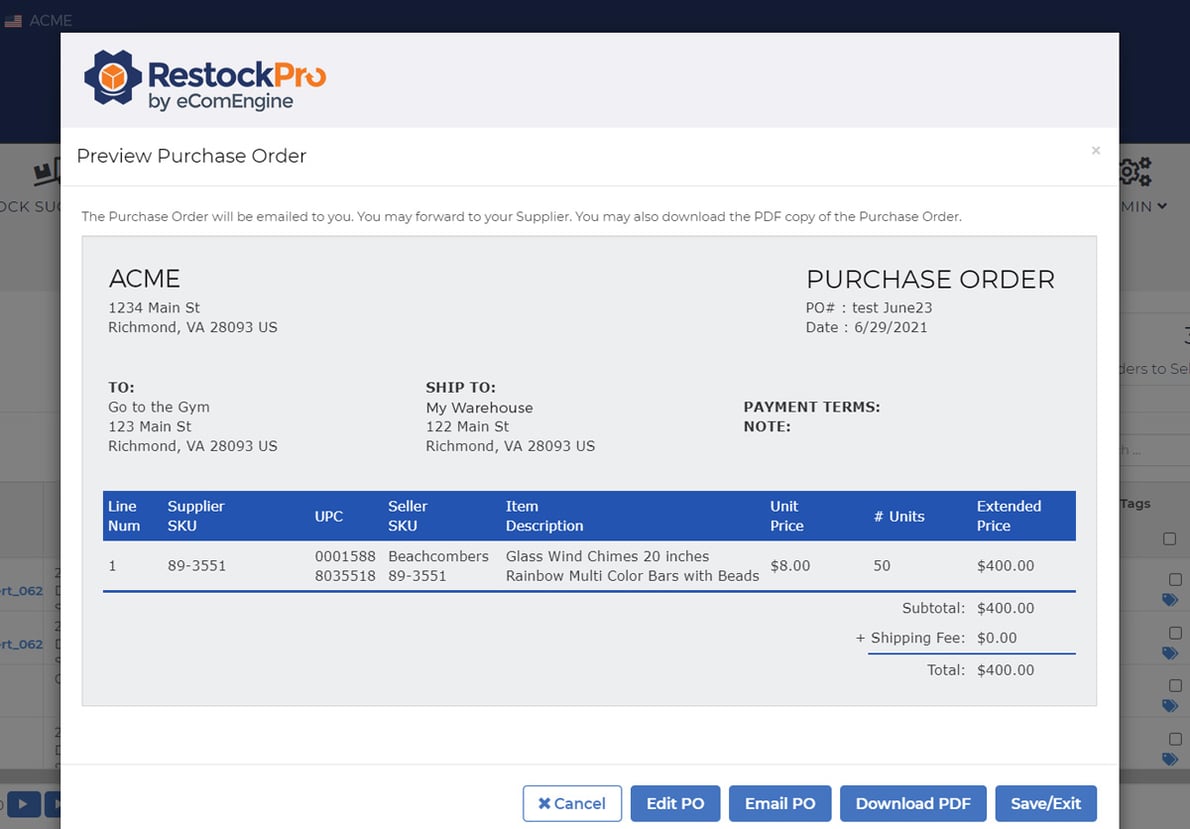
Lay your planned PO payments on the same calendar as your net settlements. If a supplier balance is due in week two but the cash to cover it doesn’t settle until week five, you just found your gap. That gap is either a smaller PO, a phased order, or a financing conversation. Better to find it now than at 2 a.m. on your bank’s login screen.
Say you’ve got $40,000 in cash and a supplier quote of $60,000 for a full peak-season load. The old way, you’d stretch, borrow, or cross your fingers. The cash-flow-first way, you map it out: your first two weeks of Q4 sales won’t settle until mid-month, and fees shave roughly a third off the top. So the $20,000 you were counting on to “come back fast” is really more like $13,000, and it lands two weeks later than you assumed. That’s not a rounding error. That’s whether you make payroll.
Now you’ve got a real decision instead of a hope. And a real decision is something you can actually act on.
Finding a cash gap isn’t bad news. It’s the whole point. A gap you see in September is a strategy problem. A gap you discover in November is an emergency. Same gap, wildly different outcome.
When the numbers show you can’t cover the full PO on cash timing alone, you’ve got three clean moves.
Split the buy into two or three shipments timed to when settlements actually land. You commit less cash up front and let your own sales fund the back half of the order. Slightly higher freight per unit, far lower blowup risk.
If cash is tight, the SKUs that earn their spot in the PO are the ones with the healthiest net margin after fees, not the ones with the loudest revenue. This is exactly where revenue-first thinking burns sellers, because the top-line hero SKU is sometimes a margin dud once Amazon takes its cut.
If the gap is temporary and the demand is real, short-term financing can bridge it. But arrange it while your numbers look calm and lenders are friendly, not when you’re already out of stock and desperate. Desperation is the most expensive interest rate there is.
Sizing the PO off the sales forecast instead of the cash position. The forecast tells you demand. It does not tell you liquidity.
Forgetting fees come out before payout. Modeling gross revenue instead of net settlement is how a “profitable” quarter turns into a cash crunch.
Treating one big PO like one event. In peak season you’re reordering on a rolling basis, and every reorder competes for the same cash the last batch hasn’t returned yet.
Dodge these three and you’re already ahead of most of your competition heading into Black Friday.
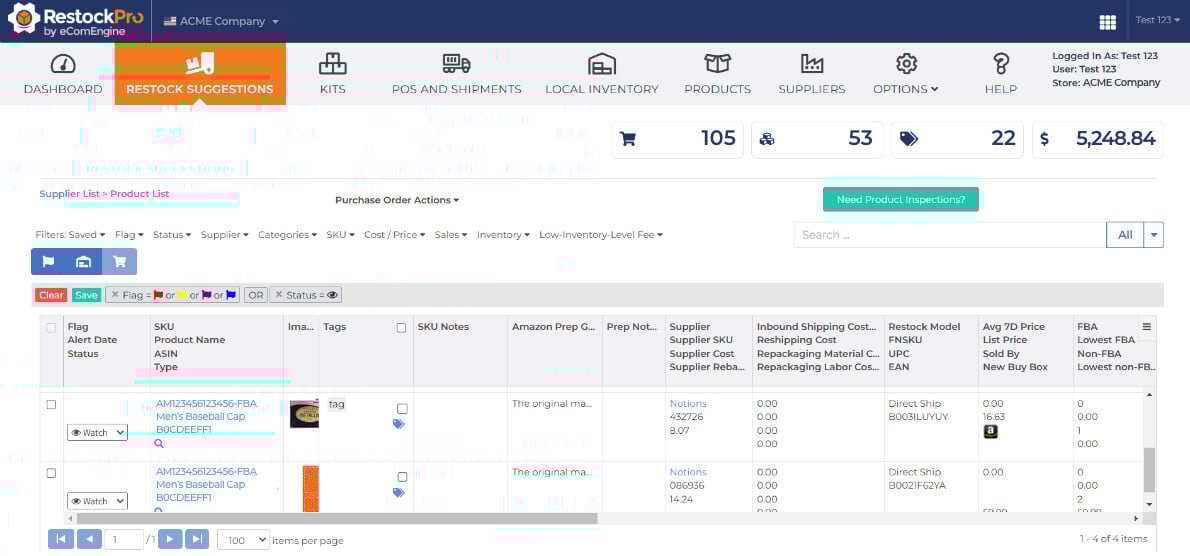
You can absolutely do this in a spreadsheet. But your restock plan, your sales velocity, and your fee data all already live in one place, so why rebuild them by hand?
RestockPro pulls your real velocity and reorder timing so you can see what’s leaving your account and when the cash is scheduled to come back. Instead of eyeballing a PO against a bank balance and hoping, you get a clear picture of your Q4 cash position before you commit a dollar to your supplier.
That’s the difference between walking into peak season confident and walking in crossing your fingers.
Your Q4 budget isn’t the number sitting in your account today. It’s that number plus whatever cash will actually settle back in time to matter, minus fees, on Amazon’s timeline. Model the gap between money out and money in, and you’ll buy exactly as much inventory as you can afford. No more, no less, no 2 a.m. panic.
Revenue is loud. Profit is right. And cash timing is what keeps you in the game long enough to enjoy both.
Q: How much inventory can you afford to buy before Q4?
Only as much as your cash position supports, not your sales forecast. Start with cash on hand, model when Amazon settlements will actually return net of fees, then net your planned purchase orders against that inbound timing. The number that survives is what you can truly afford.
Q: How long does Amazon take to pay sellers after a sale?
Amazon settlement payouts typically land about 14 days after a sale, net of fees. That means referral and fulfillment fees are deducted before the money hits your account. For Q4 inventory planning, this two-week lag is the gap most sellers forget to model before placing a large purchase order.
Q: Why plan Q4 inventory around cash flow instead of my forecast?
Your forecast tells you demand. It does not tell you liquidity. Cash leaves your account when you pay a supplier today, but sales revenue returns on Amazon’s 14-day settlement schedule, net of fees. Planning on cash timing prevents overcommitting and running dry mid-peak-season on your best-selling SKUs.
Q: How do I calculate my Q4 cash position?
Start with spendable cash on hand. Shift each week of your sales forecast out by about 14 days and subtract fees to get net settlement timing. Then lay your planned purchase order payments on the same calendar. Any week where money out exceeds money in is your cash gap.
Q: What is the biggest Q4 cash flow mistake Amazon sellers make?
Sizing the purchase order off the sales forecast instead of the cash position. Demand looks great, so sellers overcommit, then discover settlement payouts arrive too slowly to fund the next reorder. The result is a stockout on a bestseller during peak season despite a profitable quarter on paper.
Q: Do Amazon fees come out before or after I get paid?
Before. Amazon deducts referral fees, FBA fulfillment fees, and other charges from your settlement, so the payout that lands about 14 days after a sale is already net of fees. Modeling gross revenue instead of net settlement is a common way sellers overestimate available Q4 cash.
Q: How does RestockPro help with Q4 inventory planning?
RestockPro pulls your real sales velocity, reorder timing, and fee data into one view, so you can see cash leaving for purchase orders against cash returning from settlements. Instead of eyeballing a PO against your bank balance, you model your Q4 cash position before committing a dollar to a supplier.






No Comments Yet
Let us know what you think