


.png?width=50&height=50&name=feedbackfive-menu-icon(orange).png "feedbackfive-menu-icon(orange)")

Originally published on February 17, 2026, updated March 30, 2026
Menu
Join Our Email List
- Receive our monthly newsletter.
- Stay up to date on Amazon policies.
- Get tips to grow your business.
/%5BeComEngine%5DLogo-2019-linear.svg "eComEngine Logo")
 |
Review Monitoring Quickly identify review trends |
|
Review Monitoring Quickly identify review trends |

Reviews aren’t a trophy you win once and place on the shelf.
They’re closer to a campfire: if you keep feeding it, it stays warm, bright, and inviting. If you ignore it… it goes out. And then your listing feels a little colder, a little riskier, and a lot easier for shoppers to scroll past.
And shoppers do care. 91% of shoppers say they read reviews always/regularly, and 98% say reviews are essential. (PowerReviews)
So let’s talk about the habit that keeps review momentum steady, without needing a “please review us 🥺” panic sprint every time you launch a product.
Amazon review velocity = the ongoing rate at which your products receive new reviews over time.
Not “how many reviews you have total.”
Not “your lifetime rating.”
But the freshness + consistency of new review activity.
Why it matters:
Here’s the mindset shift:
Stop treating reviews like a campaign. Start treating them like hygiene. (You don’t floss once per quarter and call it a strategy. You floss weekly-ish and keep your teeth in the building.)
This weekly system has 3 outcomes:
Pull a quick pulse-check on your account and focus on change, not perfection.
Look at:
Weekly rule: Don’t try to fix everything. Identify the 1–3 ASINs that need attention.
Pro tip: A sudden drop in rating isn’t a “review problem.” It’s usually a product/expectations/problem-solving problem wearing a review costume.
Your goal is simple:
Every eligible order should receive a compliant request at the right time… automatically.
Amazon is strict about review manipulation. Anything false, misleading, inauthentic, or incentivized is a no-go.
So your weekly question is:
This is where sellers quietly bleed momentum, because “set it once” turns into “oops, it stopped sending three weeks ago.”
If an ASIN isn’t collecting reviews, one of these is usually true:
Common “review velocity blockers”
Pick one blocker and make one small fix:
You can’t respond to every review on Amazon the same way you might on other platforms, but you can create an internal routine:
Weekly rule: If you see the same complaint twice in a week, it’s not a one-off. It’s a trend forming a little evil mustache.
Your best sellers are carrying the brand. Keep them conversion-ready.
Every Friday:
Consistency beats heroics.
Habits fail when they rely on “someone remembering.”
Automation wins because it turns “we should do this” into “this just happens.”
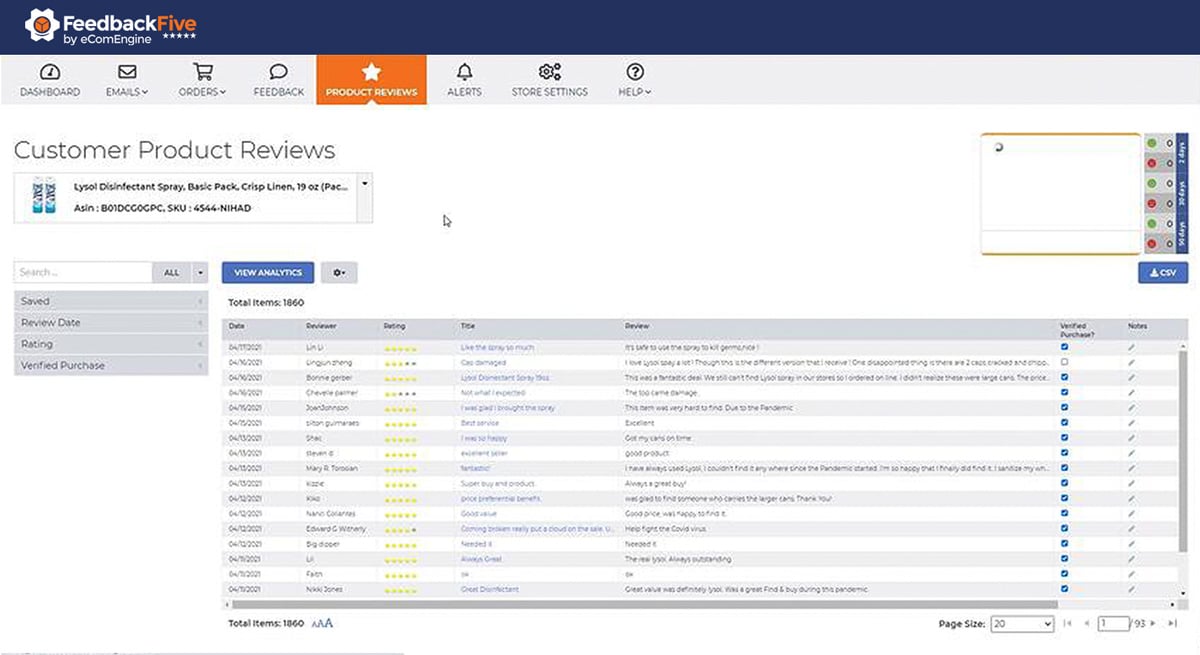
FeedbackFive is built around automating Amazon review and feedback workflows, including Request a Review automation and review monitoring/analytics.
Here are the classics:
One slow week is not a pattern.
Look for 2–4 weeks of trend before making major moves.
On Amazon, “harder” is how accounts get flagged.
Stick to compliant systems and avoid anything that could be interpreted as review manipulation.
Sometimes, yes.
But when multiple reviews mention the same issue, the market is giving you free product research. Take the gift.
Reviews influence whether shoppers trust you now. And per PowerReviews, most shoppers rely on them heavily.
Track these 5 weekly numbers:
If you do nothing else, do this weekly scorecard. It keeps you honest—and keeps momentum from silently dying.
If reviews are momentum, your job isn’t to “get more reviews someday.”
Your job is to create a weekly rhythm that:
Because shoppers are reading, and they’re deciding fast.
Q: What is Amazon review velocity?
Amazon review velocity is the rate you earn new reviews over time (weekly/monthly), not just the total number of reviews. Steady velocity helps keep your listing feeling current and trustworthy.
Q: How many reviews do I need for my Amazon listing to convert well?
There’s no universal “magic number” because conversion depends on category, price point, and competitors. A better goal is consistent review growth plus a strong rating trend so your listing keeps building trust while you scale traffic.
Q: How often should I request reviews on Amazon?
Most sellers benefit from making review requests a consistent weekly habit, but the key is compliance and consistency. Ideally, every eligible order should receive a compliant request at the appropriate time so momentum doesn’t depend on manual effort.
Q: Is it allowed to ask customers for reviews on Amazon?
Yes… if you follow Amazon’s rules. You must avoid anything that could be seen as manipulation (e.g., incentivizing reviews, asking only happy customers, or pressuring for positive reviews). Keep requests neutral and compliant.
Q: Why did my review velocity slow down?
Common causes include:
Q: What’s the best way to increase reviews without breaking Amazon rules?ow do I adjust reorder points for seasonality on Amazon?
Focus on:
Q: Should I respond to negative reviews on Amazon?
UAmazon doesn’t always allow the same style of public replies across all review types, but you can build an internal weekly process: tag the issue (damage/fit/instructions), decide the fix (listing/product/packaging/support), and ship improvements fast.









No Comments Yet
Let us know what you think